
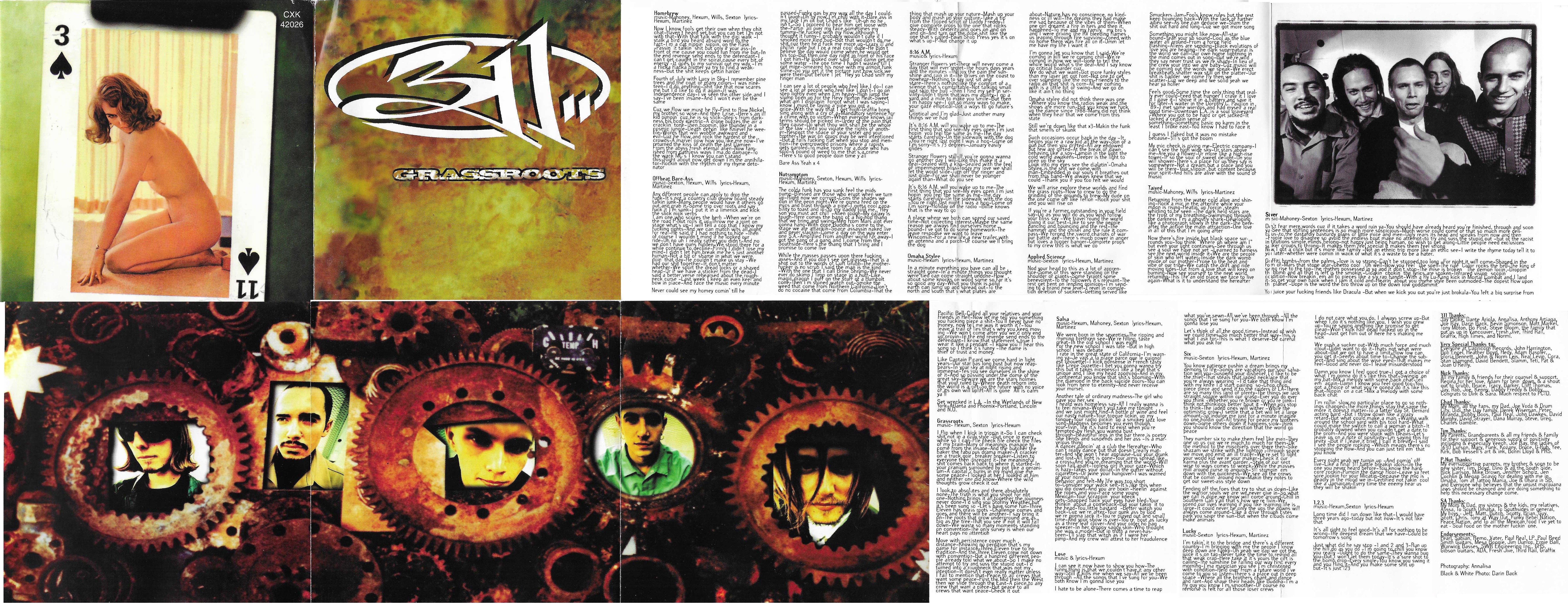
GRASSROOTS
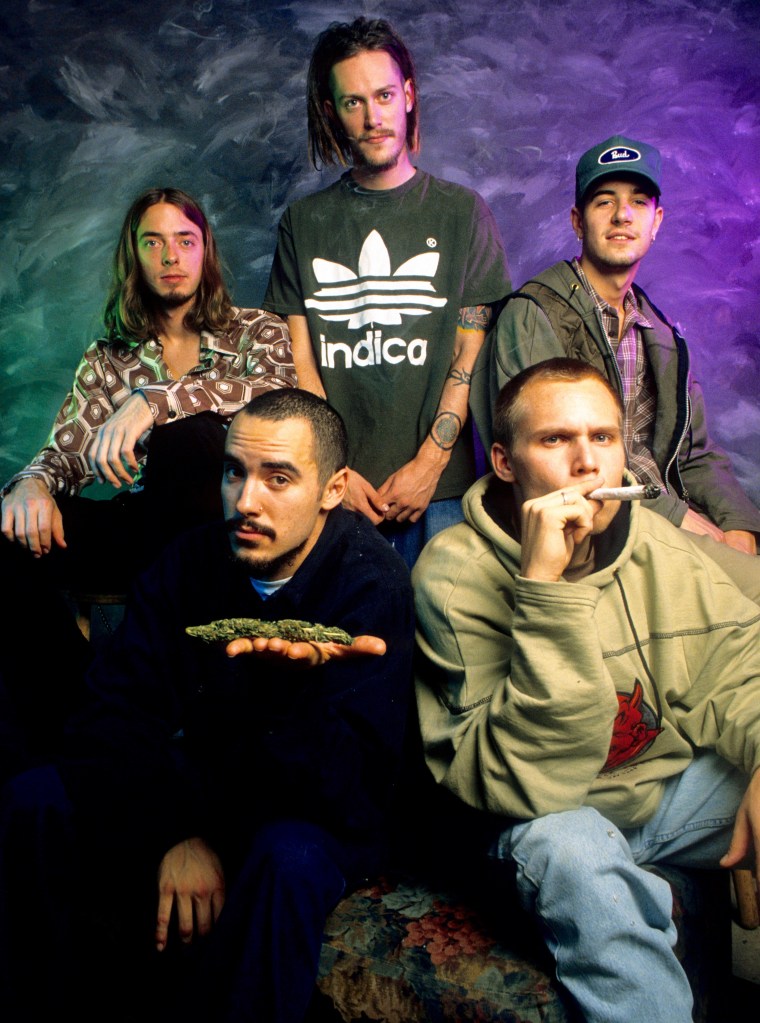
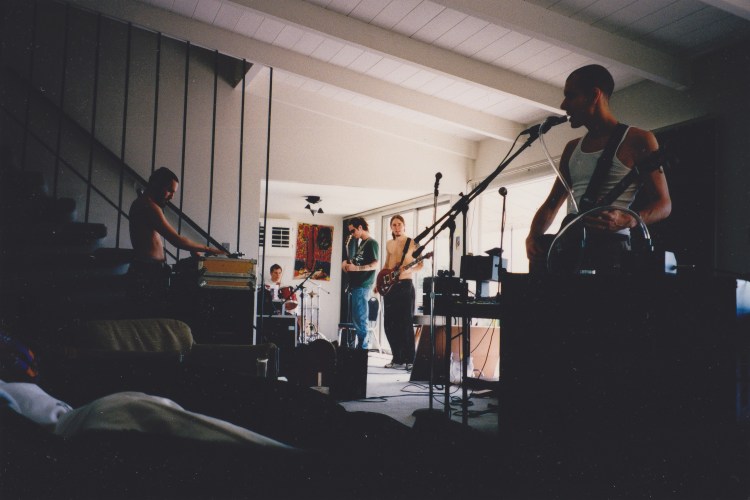
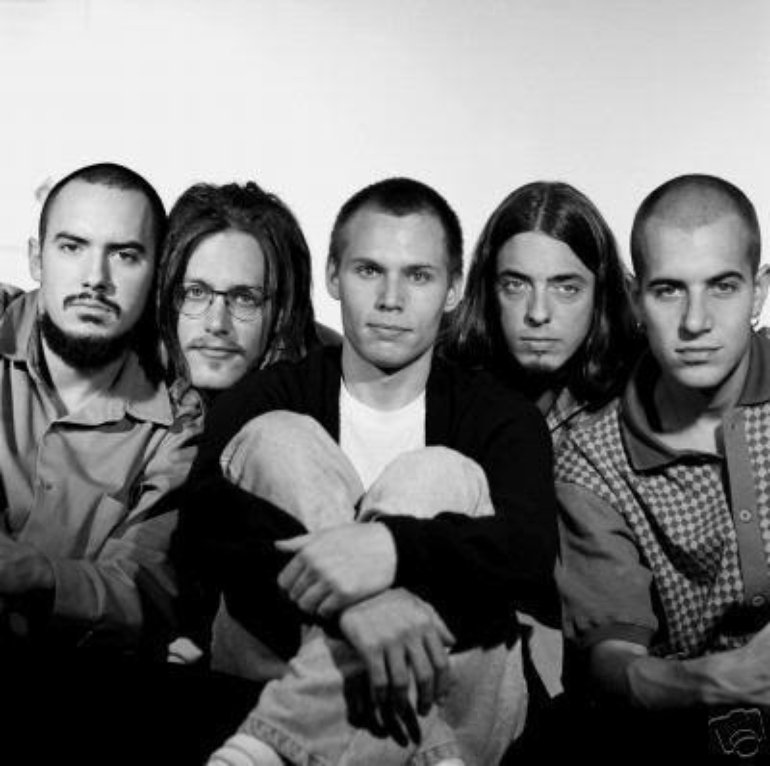
With their second album, 311 started recording with Eddy Offord, but parted ways very early in the process. It was recorded in the band’s shared home, making the sound unique from any other 311 record.
Grassroots landed #8 on Billboard Heatseeker Charts, for upcoming artists.
RADIO SINGLES / MUSIC VIDEOS:
WORDS FROM THE BAND
Song-by-song breakdown with Chad
Homebrew: “It ended up leading off the album because the band felt it was a strong rock song. It has its origins in a song from one of Hexum and Sexton’s old bands. “(It) was titled ‘Independence Day’. That was written probably in ’89, and so we had liked that chorus.” The band had a whole song but no refrain. So they took a piece of the old song, changed its tempo and inserted it into “Homebrew.”
Lucky: “Classic 311. Rock-riff-rap song that has singing choruses. We though it had some innovation as well as some rock riffs and sort of some rapping. Back then, that was pretty new.”
Nutsymtom: “A big influence on this track was John Scofield and Pat Metheny, which is why the song has a tempo change and a guitar solo in the middle. We grew up listening to those things, even jam bands like Grateful Dead. We were really into mixing rock and rap back then.”
Nutsymtom: “A big influence on this track was John Scofield and Pat Metheny, which is why the song has a tempo change and a guitar solo in the middle. We grew up listening to those things, even jam bands like Grateful Dead. We were really into mixing rock and rap back then.”
8:16 a.m.: “It’s almost funk mixed with jazz. That influence comes from our high school jazz experience (at Westside High School). Nick and I were in the band back then, (and) it just comes out in your music.”
Omaha Stylee: “I think we heard some rumors that ‘They don’t even say they’re from Omaha any more. They say they’re from California.’ We’re proud of where we came from, and we know how we feel and we kinda want to write a song that there’s no doubt where this band is from.”
Applied Science: “We were just letting the creatitvity flow. We still felt like, at that point, that we had no rules. We’re not trying to make a hit. We’re not trying to please anybody. We’re trying to make the coolest type of creation and see what happens.”
Taiyed: “Hippy funk. Jerry Garcia was still alive. It’s a nice, little, tasty, danceable jam to have on the record.
Silver: “Bobby, you be quiet out there!” That spoken line from Hexum kicks off the rock-rap song, and it’s proof that the band recorded at their house. Sexton was recording Hexum’s vocals, and Hexum’s dog, Bobby, was outside and wouldn’t stop barking. If you crank the volume, you can hear a sliding glass door open before Hexum tells the dog to be quiet. Then after the track starts, you can hear him laughing about it. “We thought it was cool, so we just left it in there.”
Grassroots: “Grassroots” was chosen as the album title to reflect the band’s homegrown aesthetic and how they felt there were no rules while making the album. The song reflects the same attitude, that their music comes from how and where they grew up. “It was a natural and real point of view.”
Salsa: Another song from the album that smashes several musical parts together to make one song, the tune deals a bit with 311’s falling-out with producer Eddie Offord during the making of “Grassroots.” About a third of the way into making the the album, Offord left the project. Sexton praised the producer’s knowledge. “It was a crazy time and we were very young. At one point, I said to him, ‘I don’t think we’re gonna finish this record together. If you could tell me what to do or how to finish this record.’ And I pulled out a notepad.”
Lose: “We were putting jazz chordings and phrasings in our music quite a bit back then. It’s a song about a break-up or about a pending break-up you know is gonna happen.”
Six: While putting together some of the drum phrases that tie together “Six’s” rhythmic guitar and drum jams, Sexton put in a bit of “The Wizard of Oz.” He played music from the film during his days in drum corps, and a beat from a portion of the movie’s introduction made it into “Six.” “I was always like, ‘I’m gonna put that thing right in (a song),’ ” he said.
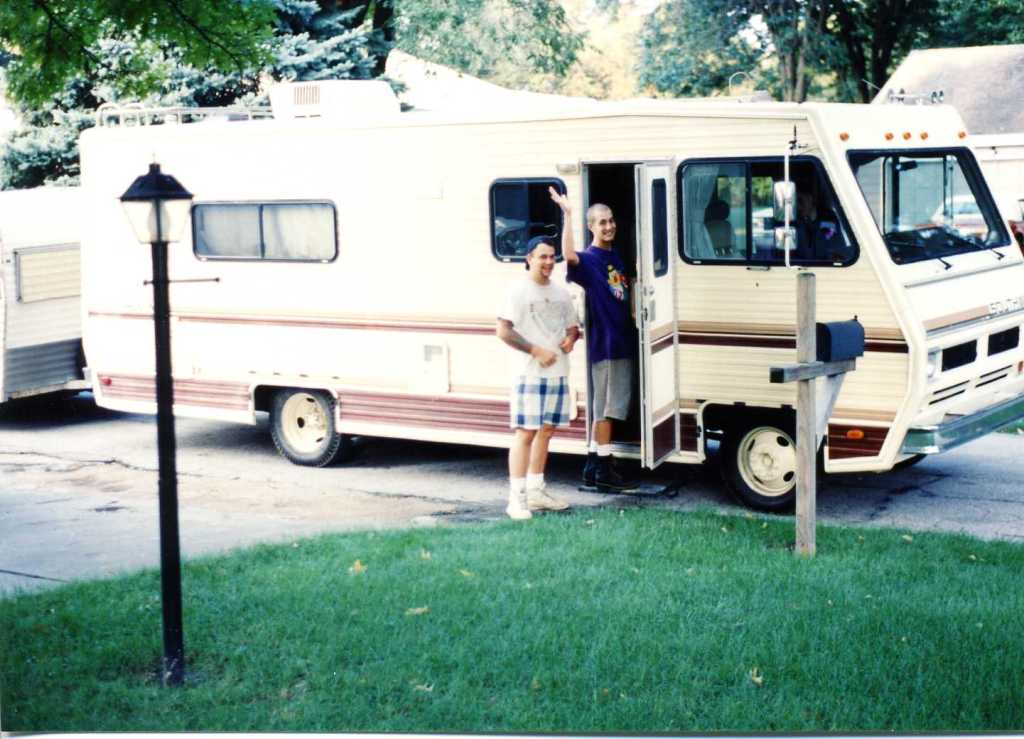
Offbeat Bare-Ass: This one is based on a true story. During a 1993 tour, the band’s RV caught fire while the guys were on their way to play Omaha. Sexton left the fire with only a pair of shorts — his clothes and his wallet burned up along with the band’s equipment and instruments. With borrowed equipment, the band played Omaha and a show in Colorado before heading back to L.A. On the way home, police stopped the band’s rented car, and they were hassled a bit for their rock star appearance.
1,2,3: “This has to be one of my favorite all-time 311 songs. I’m so happy it’s on the record.”

“We’ve always tried to be an album-oriented, grassroots, slow-growth kind of band. This new album is a little less frantic, a little more groove-oriented than MUSIC was. It’s a much more consistent album, with more steady grooves rolling through the songs Actually, it was an unconscious sort of growth, but one that we’re really happy with.
“Basically, the winter is the time to think and write and record songs and hatch new ideas, and the summer is more of a fun time, when we got out and play as many shows as we can. Basically, one without the other and we wouldn’t be complete. One’s the Yin and one’s the Yang. Both are crucial to what we’re doing. I’d say that the live thing is more fun, but we wouldn’t want to just tour and tour, because we always need to have lots of fresh material.” – Nick Hexum, 1994.
TALES FROM THE CREW
G Scott Walden was the nephew of Phil Walden, who was the president of Capricorn Records during this time period.
He said, “We started this record in LA. My uncle wasn’t satisfied with how it was going. I knew the record absolutely needed to be made as it was pivotal… which was leading up to the blockbuster “Blue” record. My uncle shut off the funds to the recording. I put everything on my American Express card behind his back and completed the record. He never knew until I went and played it for him.
“He said ‘Son’ …. I was his oldest nephew, ‘you made a hit record.’ Made me smile from ear to ear as you didn’t tell Phil Walden no. We sold over a million copies.”

 311 Archive